How Your Breastfeeding Diet Influences Your Infant’s Immune System
Breastfeeding provides many benefits for both mothers and babies. Breast milk naturally contains important nutrients, antibodies, and protective compounds that help support an infant’s growth and developing immune system. Understanding how your breastfeeding diet influences your infant’s immune system can also help mums make informed dietary choices during their lactation journey.
While breast milk offers these benefits naturally, a mother’s diet also plays an important role in supporting her overall health during breastfeeding. A balanced diet rich in vegetables, fruits, whole grains, and quality proteins can help breastfeeding mums meet their nutritional needs while supporting their lactation journey.
Several studies have shown that the factors in human milk make the infant’s immune system mature faster than if the infant had been fed less. These new findings open the door for future studies on human milk and its effects on the innate immune system of developing infants.
Infants who are breastfed receive additional protection against antibodies and other proteins from immune cells in human milk. Given the immune-boosting factors in breast milk, it is not surprising that breastfed babies are less likely to suffer from ear infections, vomiting, diarrhoea, pneumonia, urinary tract infections and some types of meningitis. Breast milk gives babies a head start in preventing and fighting infections. Breast milk is made up of other proteins, fats, sugars and white blood cells that work together in a variety of ways to fight infections.
How Diet Supports Gut Health And Immunity
More and more studies are looking into how gut health supports the immune system. Ideally, the more diverse the gut microbiome, the better it is at supporting overall health and immunity. One way to encourage a diverse gut microbiome is through fibre intake from different food sources.
|
Food Source |
Benefits |
|
Whole grains |
Provide fibre that supports beneficial gut bacteria |
|
Vegetables |
Supply fibre, vitamins, and antioxidants |
|
Fruits |
Contribute fibre and natural antioxidants |
|
Legumes |
Help increase fibre intake and support gut health |
|
Herbs |
Provide fibre and plant compounds that support overall wellbeing |
When beneficial bacteria thrive, they help form a protective layer in the gut that may support the body’s natural defence system. This is why healthy lactation meals often include a variety of vegetables, fruits, whole grains, and legumes.
Simple Ways To Increase Fibre Intake During Breastfeeding
The recommended fibre intake for women in Singapore is approximately 20g per day. Here are some simple ways to achieve this:
- Have at least 2 servings of fruits daily
- Have at least 2 servings of vegetables daily
- Include 2–3 servings of whole grains each day
- Replace white rice with brown rice occasionally
- Mix 50% brown rice with 50% white rice
- Include fibre-rich foods such as beans, oats, millet, and quinoa
Small dietary changes like these can help breastfeeding mums increase their daily fibre intake more easily.
Foods That Support A Healthy Breastfeeding Diet
A healthy breastfeeding diet should include a variety of nutrient-rich foods. Consuming different food groups helps breastfeeding mums meet their nutritional needs while supporting overall wellbeing.
Some beneficial foods include:
- Leafy green vegetables
- Colourful vegetables such as carrots and capsicums
- Fruits such as berries and oranges
- Whole grains including brown rice and oats
- Legumes such as beans and lentils
- Fish and lean proteins
- Nuts and seeds
Including a variety of these foods can help create a more balanced lactation diet.
Other Important Nutrients For Breastfeeding Mums
While fibre is important for digestive health and overall wellbeing, breastfeeding mums should also pay attention to other key nutrients that support their nutritional needs during lactation.
Protein
Protein helps support normal tissue maintenance and repair after childbirth. Good sources of protein include fish, poultry, eggs, lean meat, tofu, beans, and dairy products.
Calcium
Calcium is important for maintaining healthy bones and teeth. Breastfeeding mums can obtain calcium from milk, yoghurt, cheese, calcium-fortified foods, and certain leafy green vegetables.
Iron
Iron helps support the body’s normal production of red blood cells and can be found in foods such as lean meat, poultry, fish, beans, and spinach.
Healthy Fats
Healthy fats, including omega-3 fatty acids, are important components of a balanced diet. Sources include salmon, sardines, walnuts, chia seeds, and flaxseeds.
Fluids
Breastfeeding mums should also stay well hydrated throughout the day. Drinking sufficient water and consuming fluid-rich foods can help support overall wellbeing during the breastfeeding journey.
By including a variety of nutrient-rich foods in their daily meals, breastfeeding mums can enjoy a more balanced diet while meeting their nutritional needs during this important stage of motherhood.
This is why many lactation meal plans aim to provide a combination of vegetables, whole grains, quality proteins, and other nutrient-rich ingredients in every meal to support a balanced breastfeeding diet.
How Relacto Fulfils This Concept
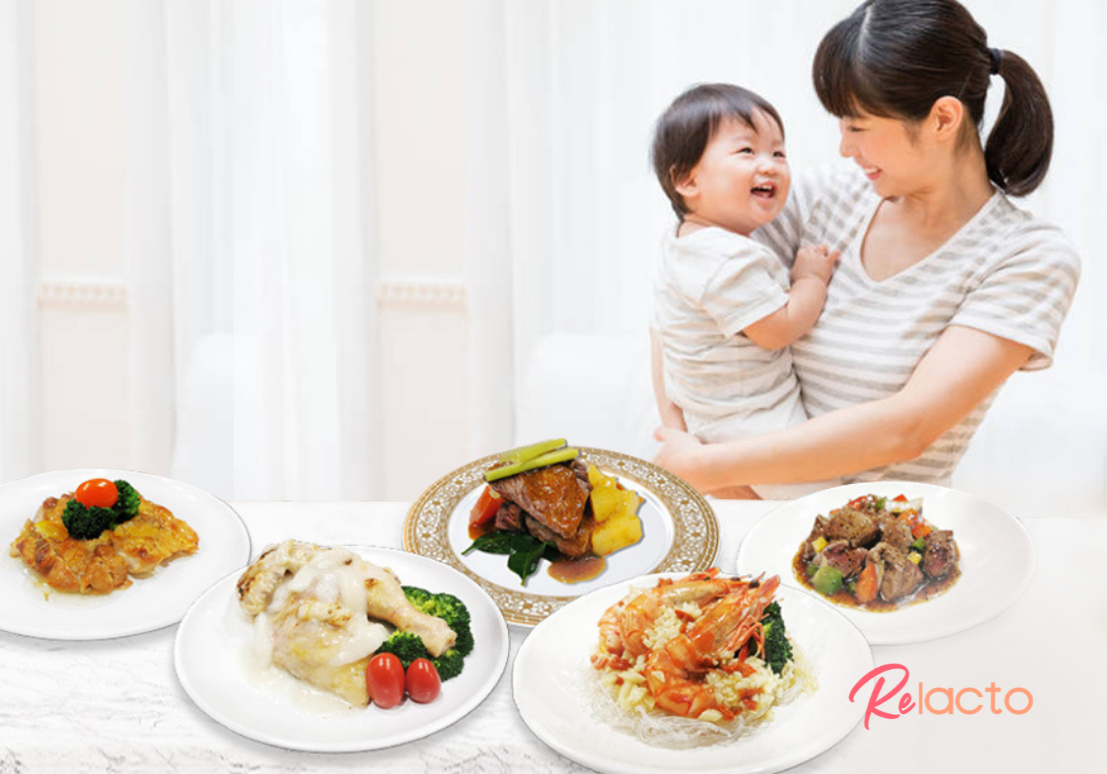
Many of our meals in our lactation diet menu contain carrots, capsicums, goji berries, tomatoes, black beans, or leafy vegetables to add colour and variety to your vegetable intake and increase fibre intake, even in your protein dishes. These are on top of the vegetable dishes that are already given at every meal. For example:
- Sweet and sour salmon
- Braised pork trotter in black vinegar
- Oven-baked chicken with beetroot
- Moroccan braised chicken
We also understand that not all mummies enjoy brown rice options, so things like brown rice , red beans, millet, quinoa, and rolled oats are mixed with white rice and served in a different composition every day. Some of the examples are:
- Tri-coloured grain rice
- Five-grain rice
- Black barley with white rice
- Quinoa mixed with white rice
- Brown rice vermicelli
Beyond providing balanced nutrition menu planning for lactating mother, ReLacto offers more than 100 traditional Chinese and fusion dishes, giving breastfeeding mums a wider variety of meal options throughout their lactation journey. Our meals also incorporate lactation-support ingredients such as fenugreek and fennel, which are commonly included in breastfeeding diets.
To cater to different dietary preferences, mums can customise selected ingredients based on their needs, and we also offer a non-beef menu option. For added convenience, every meal is freshly prepared and delivered directly to your doorstep.
Conclusion
Breast milk naturally contains antibodies and protective compounds that help support an infant’s developing immune system. While no single food can guarantee better immunity, maintaining a balanced breastfeeding diet can help mums meet their nutritional needs while supporting their overall wellbeing.
By including a variety of vegetables, fruits, whole grains, quality proteins, and fibre-rich foods in daily meals, breastfeeding mums can enjoy a more balanced lactation journey. Choosing nutritious lactation meals can also make it easier to maintain healthy eating habits during this important stage of motherhood.
For mums looking for greater convenience, professionally prepared lactation meals can help provide a variety of balanced dishes throughout their breastfeeding journey.
Frequently Asked Questions
Can my diet affect my breast milk?
A mother’s diet contributes to her overall nutritional status during breastfeeding. Eating a balanced diet can help support her health and well-being throughout her breastfeeding journey.
What foods should breastfeeding mums eat?
Breastfeeding mum meal plan are encouraged to consume a variety of vegetables, fruits, whole grains, lean proteins, legumes, and healthy fats as part of a balanced diet.
Why is fibre important during breastfeeding?
Fibre supports digestive health and is commonly found in nutrient-rich foods such as fruits, vegetables, legumes, and whole grains.
Can lactation meals help breastfeeding mums maintain a balanced diet?
Yes. Well-planned lactation meals can provide a variety of nutrients, vegetables, proteins, and whole grains, making it easier for mums to meet their nutritional needs.
Can breastfeeding mums eat spicy food?
Most breastfeeding mums can enjoy spicy foods in moderation unless advised otherwise by a healthcare professional.
How much water should breastfeeding mums drink?
Breastfeeding mums should drink sufficient fluids throughout the day and increase intake according to their thirst levels.